 Car insurance
 Telematics
 Van insurance
 Home insurance
 Car finance
driving in the uk
10 surprising UK driving laws
From keeping your car clean to driving with your dog. Get to know some of the odd, unique and lesser-known laws for driving in the UK.





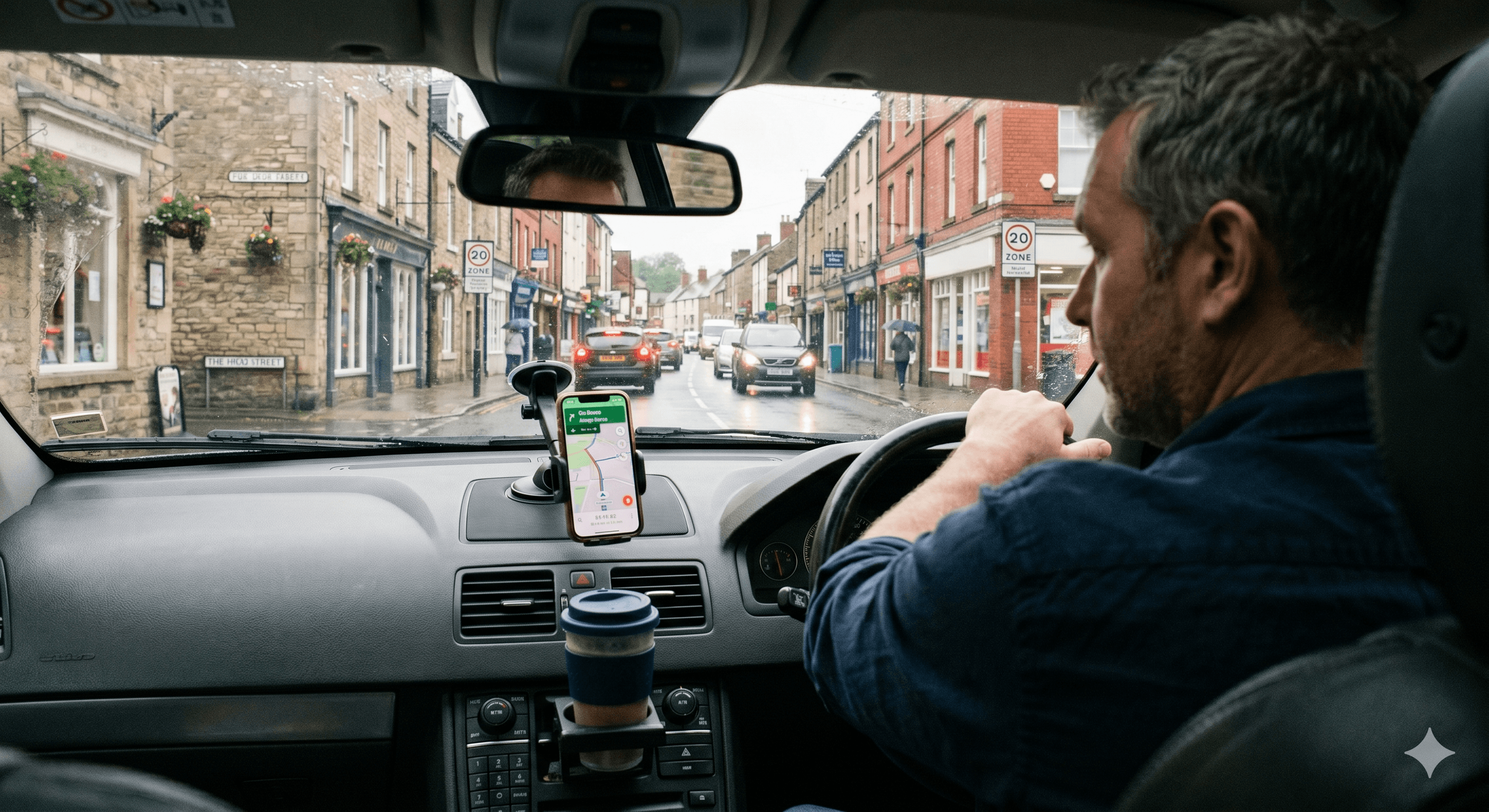

Whether you're moving to the UK or just visiting, it's important to understand the rules for using an international driving licence in the UK. Using your international licence depends on where you're from and how long you stay for.
In this guide we explain the rules for different countries, when to exchange an international licence for a UK one and how this can affect your car insurance.
Yes. If you hold a valid driving licence issued in another country, you can use it to drive in the UK. The key condition is that your licence must still be valid and you must be 17 or over.
For people who have moved to the UK, you can drive on your foreign driving licence for up to 12 months from the date you arrive. After that, you may need to exchange it for a UK driving licence depending on where you're from (more on this below).
There are slightly different rules for Great Britain (England, Scotland and Wales) and Northern Ireland. So if you're going to be moving to or driving in Northern Ireland, check their government website for the latest information.
You can use your international driving licence in the UK for up to 12 months. So if you're visiting the UK as a tourist or on a short-term trip, you can drive freely without any additional steps, as long as your licence is valid and in date.
Once you become a UK resident, you can drive on your foreign driving licence for up to 12 months. After that, it's no longer legal to drive on it, and you'll need to take action.
The 12 months starts from the date you become a UK resident, not from the date you first drive. So if you arrive in the UK but don't drive for the first six months, you'll still only have six months left on your entitlement.
Your international driving licence also needs to be valid in its country of issue for the whole time you're using it here. If it expires before the 12 months is up, you'll need to renew it or apply for a UK driving licence.
The UK accepts driving licences from all countries for the first 12 months. After that, it depends where your licence was issued.
If you're from the EU or a European Economic Area (EEA) country, you can drive using your international licence until you reach 70 years old.
If you were 67 or older when you became a resident, you can drive on your EU driving licence for 3 years after that point.
If you want to keep driving once you turn 70, simply exchange your European licence for a British one.
The European Economic Area is made up of all members of the European Union as well as Iceland, Liechtenstein and Norway.
The UK has agreements with a number of countries that allow people to exchange their foreign driving licence for a UK one without taking the theory or practical test again.
These "designated countries" are: Australia, Barbados, British Virgin Islands, Canada, Falkland Islands, Faroe Islands, Gibraltar, Hong Kong, Japan, Monaco, New Zealand, Republic of Korea, Singapore, South Africa, Switzerland and Zimbabwe.
If your licence is from a country outside the EEA and not on the designated list, you can still drive for up to 12 months. But after that, you'll need to apply for a UK driving licence and pass the UK driving tests.
You need to make sure you're a UK resident before you apply for your UK licence.
A UK resident is someone who has a UK address and is living here permanently (or intends to live here permanently). This means at least 183 days a year.
You'll then need to go to the government website to find out which forms you need to complete and whether there's a fee to pay.
To find out more, check out our guide to exchanging an international driving licence for a UK licence.
Yes, car insurance is a legal requirement for all drivers in the UK. If you are renting a car the provider may organise this for you. If you're driving your own car, you'll need to do this before you drive.
Not all insurers will accept an international driving licence, but at Marshmallow we can insure drivers from all over the world.
At Marshmallow, we offer car insurance designed with UK newcomers in mind. We accept international driving licences, plus we look at your driving history and proof of claim-free driving wherever you lived before.
To see what you could save get a free quote today.
You need your original driving licence with you whenever you drive. If your licence isn't in English or uses a non-Latin script, it's a good idea to carry an International Driving Permit too, though this isn't a legal requirement for driving a privately owned car.
Yes. You should always tell your insurer about changes to your driving licence, including switching from a foreign driving licence to a UK one. Failing to update your details could affect any claim you make. Contact your insurer as soon as you get your new licence.
"License" is the American English spelling, used in the US and some other countries. In British English, "licence" is the correct spelling. In the UK "licence" is the spelling for a noun whereas "license" is a verb.
From keeping your car clean to driving with your dog. Get to know some of the odd, unique and lesser-known laws for driving in the UK.

When you’re new to driving in the UK, it’s easy to make mistakes. The road signs can be confusing, the roundabouts are enough to make your head spin.

From the polite to the puzzling – some things UK drivers do don’t seem to make sense. Find out what it all means with these seven unwritten road rules explained.