 Car insurance
 Telematics
 Van insurance
 Home insurance
 Car finance


car insurance guides
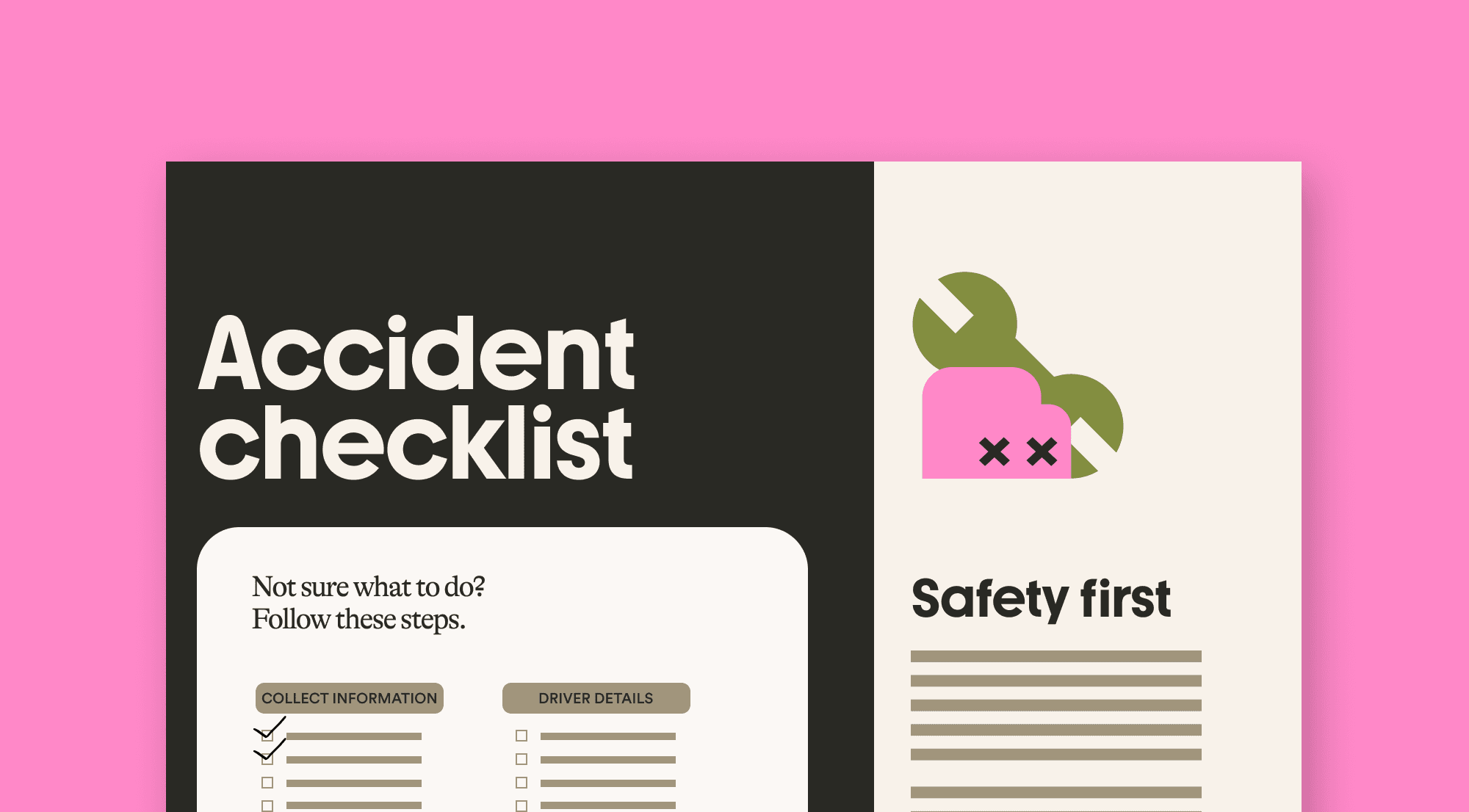
How to make a car insurance claim: 5-step checklist
Learn how to make a car insurance claim with our 5-step guide, covering what to do at the scene, evidence to gather, and how the claims process works.


After a car accident, people often ask what happens to my car insurance price? The repairs might be sorted quickly, but the way an insurer views the risk of insuring you can change, and that can show up in your next quote.
There is no single number for how much premiums increase after an accident. The change, if there is one, depends on a number of factors, including:
If you’re unsure what to expect at renewal, it can help to get a few quotes and compare them side by side.
No. Although it is common for your insurance premium to rise if you make a claim, it depends on your situation.
Insurers set prices based on risk. If the accident wasn’t your fault and the costs are reclaimed from the other side, you may not see a price rise.
However, if you caused the accident and this led to a big claim, then insurers may view you as higher risk for the future.
It varies widely, but the difference can range from a modest uplift to several hundred pounds at renewal. The biggest drivers tend to be:
A minor bump that results in a small repair is usually priced differently from a larger claim that involves major damage or injuries.
A single event also sits alongside everything else on your profile, such as where the car is kept, annual mileage, and previous incidents. That is why two drivers can have similar accidents and still see very different renewal prices.
A not-at-fault accident can still influence the price because insurers are not only pricing blame, they are pricing exposure.
Being involved in a collision, even when another driver caused it, can suggest you drive in higher-risk conditions.
That might be down to busy routes, urban parking, commuting patterns, or simply bad luck.
In practice, non-fault incidents often have a smaller impact than at-fault claims, but they can still nudge quotes up.
Read our guide to non-fault accidents for more information.
Many UK insurers ask about accidents and claims from the last five years. During that time, an incident can affect your pricing, although the impact often fades as it gets older, assuming nothing else happens.
The first renewal after the accident is usually the point where you notice the change most. After that, it often softens, but it is not always a smooth downward line because other factors can change too.
Not necessarily. People often assume claiming is the default, but there are cases where it is worth pausing.
If the repair cost is close to your excess, claiming may not offer much financial benefit, and it may still affect future pricing.
For larger damage, or where you need the insurer’s support to get the car repaired and moving again, claiming is usually the sensible option.
The right choice depends on the costs involved and on how comfortable you are paying for repairs yourself.
Read our five-step checklist for making a car insurance claim.
An accident can change what you pay for insurance, but the important point is that it’s rarely a simple penalty.
Insurers are recalculating risk based on what they now know about your driving history and the circumstances around the incident, so the effect on your next quote can be anything from minimal to significant.
The most useful approach is to focus on what you can control:
Over time, if you keep a clean record, the impact usually fades and your pricing tends to settle back down.
To see if you could save money on your car insurance, get a free, no-obligation quote today.
Learn how to make a car insurance claim with our 5-step guide, covering what to do at the scene, evidence to gather, and how the claims process works.
Find out how long a car insurance claim takes to settle, what can affect the timeline, and how you can help speed the process up.
We share 5 things not to do after an accident, because sometimes that's easier to remember!