 Car insurance
 Telematics
 Van insurance
 Home insurance
 Car finance



driving in the uk
10 surprising UK driving laws
From keeping your car clean to driving with your dog. Get to know some of the odd, unique and lesser-known laws for driving in the UK.
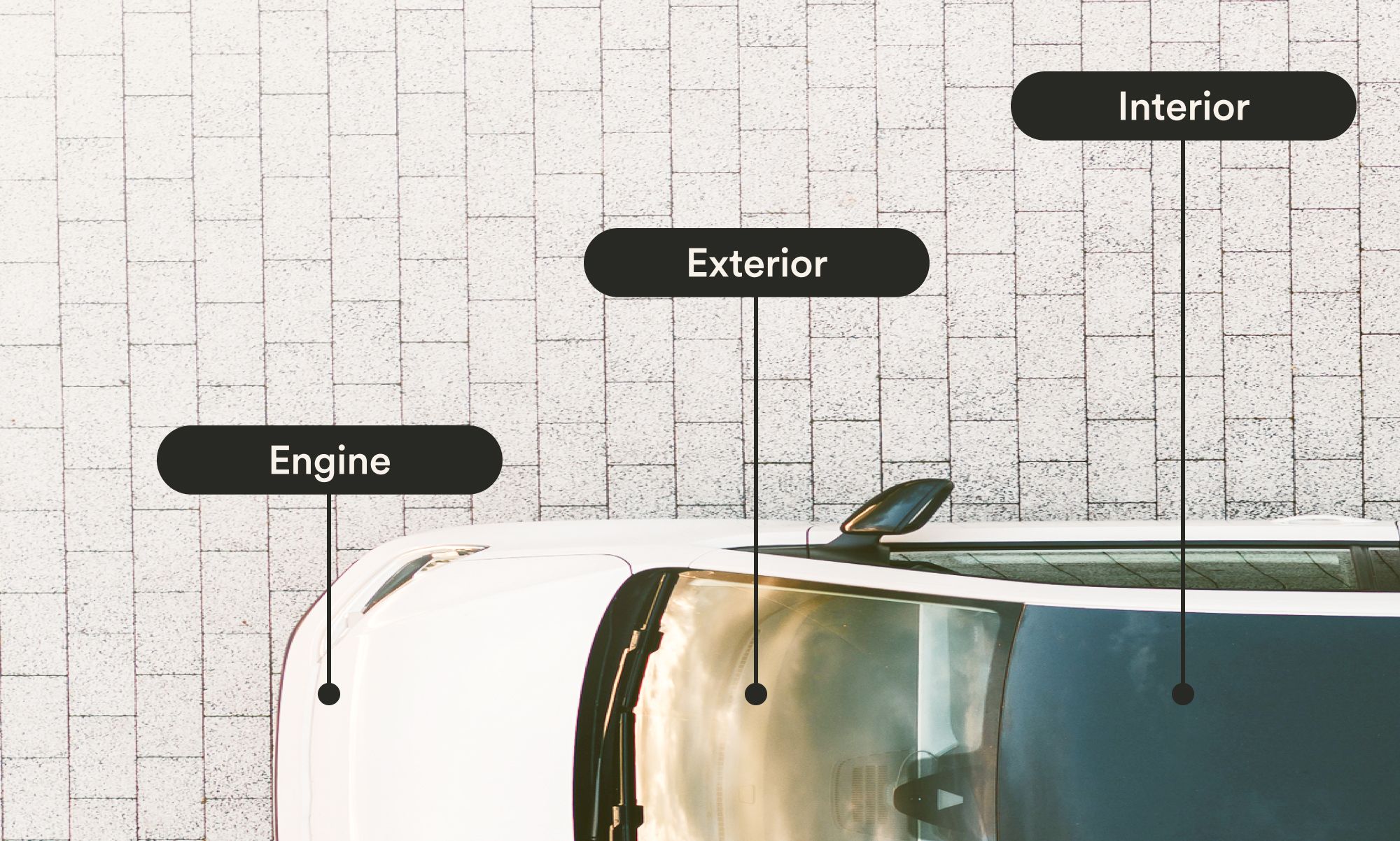

Quick Answer: When buying a used car, you need to check five key areas: tyres for wear and legal tread depth, paintwork and wheels for damage, the bumper and body for dents or rust, the windscreen for chips or cracks, and the interior for stains, tears or unusual smells. A thorough inspection helps you avoid costly repairs and ensures you're getting good value.
Buying a used car is the most affordable way to get on the road in the UK. And it's a good plan. Done right, buying second-hand can help you save a significant amount of money… if you know what to look out for.
A car that looks ok initially could be hiding some expensive problems. If you don't know which questions to ask when buying a car, or have an expert friend to help, you could end up with a dud.
So to help, we spoke to the team at ClickMechanic, the UK's leading car maintenance platform. They've given us a comprehensive used car buying checklist to follow when you're inspecting vehicles from private sellers or dealers.
Tyres are one of the most important safety features on any car. When you're inspecting a used car, checking the tyres should be at the top of your checklist.
The legal minimum tread depth in the UK is 1.6mm across the central three-quarters of the tyre. To check this, you can perform the simple 20p test.
Just insert a 20p coin into one of the tread grooves on the tyre. If you can't see the outer band on the coin, your tyres are above the legal limit. If the outer band is visible, the tyres need replacing.
Driving a car with tyres below the legal limit can risk a fine of £2,500 and three penalty points per tyre. This is one of the surprising UK driving laws that can catch people out. We also recommend buying a tyre tread depth gauge (around £5) to quickly and accurately measure the depth of your tyre grooves.
Uneven tyre wear can indicate problems with wheel alignment, suspension or steering. Run your hand across the tyre surface. If one side feels more worn than the other, or if you notice bald patches, this could mean expensive repairs ahead.
Don't forget to inspect all four tyres, not just the front ones. Check the spare tyre too if the car has one. Replacing all four tyres can cost £200-400 depending on the car, so factor this into your budget if they're close to the legal limit.
Look closely at the tyre sidewalls for bulges, cracks or cuts. These are signs of damage that make the tyre unsafe and mean it needs replacing immediately, even if the tread depth is fine.
Tyres degrade over time, even if they haven't been used much. Check the DOT code on the sidewall - the last four digits show the week and year of manufacture. Tyres older than six years should be replaced regardless of tread depth. This is something that's checked during an MOT test, so it's worth knowing about.
A car's exterior condition tells you a lot about how it's been looked after. Poor paintwork might just be cosmetic, but it can also hide more serious problems.
Always view the car in daylight if possible. Artificial lighting can hide imperfections in paintwork. Walk around the car slowly and look from different angles.
Minor scratches are normal on used cars, but deep scratches, dents or scrapes could indicate the car hasn't been well maintained. Check all panels, including the roof and lower sections near the wheels.
If panels look slightly different colours, they may have been replaced and resprayed to cover up accident damage. This isn't always a problem, but you should ask the seller about any repairs and check the car's history.
Look for paint overspray on rubber seals, window edges or trim. This suggests rushed or amateur repair work. Run your finger along panel edges - if you feel rough or uneven surfaces, the repair quality might be poor.
Rust is a serious issue that only gets worse. Check carefully around wheel arches, door sills, the boot floor and under the car. Small rust spots on the surface might be manageable, but extensive rusting or bubbling paint means expensive bodywork repairs.
Look for 'bubbling' in the paintwork, especially on older cars. This is where rust is forming underneath the paint and will soon break through.
Inspect all four wheels for kerb damage, cracks or corrosion. Alloy wheels can be expensive to replace - a single wheel might cost £100-300 depending on the car. Look inside the wheel arches too for damage or rust.
The overall body condition reveals whether the car has been in accidents or poorly maintained. A careful inspection can save you from buying a car with hidden structural damage.
Walk around the car and look at the gaps between panels like doors, bonnet and boot. They should be consistent all the way around. Uneven gaps suggest panels have been replaced after an accident, or that the car has structural damage.
Check bumpers carefully for cracks, scratches or sections that don't fit properly. Modern bumpers are expensive to replace - often £300-600 including painting and fitting.
Open and close all doors, the boot and the bonnet. They should open smoothly and close with a solid sound. If doors are hard to close or make rattling noises, the hinges might be worn or the car could have frame damage from an accident.
If possible, get underneath the car or at least crouch down and look. Check for oil leaks (dark, slippery patches), coolant leaks (often brightly coloured), rust on the exhaust or suspension, and any hanging or damaged parts.
While you're checking underneath, be wary if the underside looks freshly painted or coated. Sellers sometimes cover rust or damage with underseal to hide problems temporarily.
Stand back and look at the car from different angles. It should sit level - if one corner sits lower than the others, there might be suspension problems.
Windscreen damage is easy to spot but often overlooked. It can be expensive to fix and will cause an MOT failure if it's in the wrong place.
Look carefully at the entire windscreen for any chips, cracks or star-shaped breaks. Even small damage can spread quickly, especially when driving on bumpy roads or in cold weather.
A chip bigger than 10mm in the driver's direct line of sight (a 290mm wide zone in front of the steering wheel) will fail an MOT. Any crack or chip larger than 40mm anywhere on the windscreen is also an MOT failure.
Small chips away from the driver's sight line can usually be repaired for £50-80. Larger cracks or damage in critical areas means a full windscreen replacement, which costs £150-300 for most cars, or more for luxury vehicles.
While you're checking glass, inspect all side windows, the rear window and mirrors. Chips or cracks in these are less critical than the windscreen but still need fixing.
Test the windscreen wipers. Blades should be in good condition with no tears or missing sections. Worn wipers are cheap to replace (£10-20) but factor it into your negotiation.
A recently replaced windscreen isn't necessarily bad, but ask why it was replaced. If the seller says it hasn't been replaced but you see fresh sealant around the edges, this might indicate undisclosed accident damage.
The interior condition shows how the car has been treated day-to-day. It can also reveal problems that aren't obvious from the outside.
Check all seats for tears, burns, stains or excessive wear. Leather seats can crack and tear, which is expensive to repair properly. Fabric seats with stains might clean up, but they could also indicate water leaks.
Lift the floor mats and check the carpets underneath, especially in the footwells. Damp carpets or a musty smell indicate water leaks, which can be difficult and expensive to trace and fix. Water damage can also cause electrical problems and rust.
Take note of any strong smells. Cigarette smoke is hard to remove completely. A musty, damp smell means water leaks. Overpowering air freshener might be hiding something worse.
Modern cars have lots of electrics that can go wrong. Test everything:
Electrical repairs can be expensive and frustrating to diagnose, so make sure everything works before you buy.
Turn on the ignition without starting the engine. Various warning lights should appear briefly then disappear once you start the engine. If any warning lights stay on (especially the engine management light, oil warning or airbag light), the car has a problem that needs investigating.
Look at the driver's seat, steering wheel and pedals. Heavy wear on these suggests high mileage or hard use. If the car shows 50,000 miles but the driver's seat is threadbare and the steering wheel is worn smooth, the mileage might have been adjusted.
Check the boot for damage, rust or water stains. Make sure the boot floor is solid and not rusty underneath the carpet. Check if there's a spare wheel, a jack and a locking wheel nut key - these should come with the car.
Go through every button, switch and control systematically. Check indicator stalks, light switches, mirror controls, seat adjustments and anything else you can find. It's tedious but could save you expensive repairs later.
A thorough used car inspection checklist doesn't end with what you can see and touch. There are crucial background checks you need to make before buying.
A full service history is valuable because it shows the car has been properly maintained. Ask to see service stamps in the book or receipts for work done. Regular oil changes and servicing prevent expensive engine problems.
You can check a car's complete MOT history for free on the government website. This shows previous test results, recorded mileage at each test and any advisories or failures. It's a great way to verify the mileage and see what problems the car has had.
Gaps in the service history or missing MOT records are red flags. They might indicate the car has been off the road, used commercially or not maintained properly.
Before you buy, always check these documents:
V5C logbook (registration certificate): Make sure the seller's name matches the name on the V5C. Check the vehicle identification number (VIN) on the V5C matches the VIN on the car (usually on a plate in the windscreen or on the door frame).
Outstanding finance check: Use a history checking service to confirm there's no outstanding finance on the car. If there is, the finance company legally owns the car and could repossess it from you even after you've paid for it.
Previous keeper information: The V5C shows how many previous keepers the car has had. Lots of owners in a short time could mean the car has problems.
Insurance write-off check: Check the car hasn't been written off by an insurance company after an accident. Category S and N write-offs can be repaired and sold legally, but they're worth less and could have hidden damage.
A test drive is essential. It reveals problems you won't spot when the car is stationary. When driving, check for:
Engine starting: The car should start easily without excessive cranking or hesitation. Listen for unusual noises when starting.
Strange noises: Listen for rattles, knocks, squeaks or grinding sounds. Knocking from the engine could indicate serious problems. Squealing when braking suggests worn brake pads.
Steering and handling: The steering should feel smooth and responsive, not loose or heavy. The car should track straight when you let go of the wheel briefly on a straight road.
Gear changes: The gears should change smoothly without crunching or grinding. If it's an automatic, gear changes should be smooth and barely noticeable. Manual clutches should bite consistently without slipping.
Brakes: The brakes should feel responsive and stop the car smoothly without pulling to one side. Vibration through the pedal or steering wheel when braking suggests warped discs.
Warning lights during driving: No warning lights should appear while driving. If any do, stop and investigate immediately.
Test the car on different road types if you can - around town, on faster roads and over bumps. This gives you a complete picture of how the car performs.
Once you've completed your used car checklist, you need to decide whether to proceed with the purchase.
Even if you've done a thorough check yourself, consider getting a professional pre-purchase inspection. A qualified mechanic can spot problems you might miss and check things like compression, timing belts and hidden rust.
Services like ClickMechanic make it easy to book a mechanic to inspect the car at the seller's location.
If you've found issues during your inspection, use them to negotiate the price down. Minor problems like worn tyres or a scratched bumper are normal negotiating points. More serious issues like engine warning lights or structural damage should make you reconsider the purchase entirely.
Calculate the cost of fixing any problems you've found and use this to make a lower offer. Most sellers expect some negotiation, especially on private sales.
Some problems are too serious to ignore, no matter how good the price seems. Consider walking away if you find:
There will always be other cars. Don't let yourself be pressured into buying something that doesn't feel right.
When you've found a car that passes your checklist and you're happy with the price, you're ready to buy. Make sure you:
If you're planning to finance the purchase, understand how car finance works in the UK before you commit.
Once you've bought your car, you need to get it insured before you can drive it away. You can't legally drive any car in the UK without insurance, even if you've just bought it.
Many people new to the UK don't realize that driving without insurance is illegal from the moment you take control of the car. You could face a fine of up to £300 and six penalty points on your licence.
At Marshmallow, we specialise in helping people new to the UK get car insurance. We count your driving experience and claim-free history from anywhere, so we could give you a cheaper price.
All our policies are fully comprehensive too for added peace of mind.
Getting a quote is straightforward. You'll need:
Once you've got all your details ready, you can get a quote and start driving your newly purchased car with confidence.
Start with the basics: tyres, body condition and service history before moving to detailed mechanical checks. These give you a quick overview of how well the car has been maintained.
Look for mismatched paint, uneven panel gaps, new parts on an old car and overspray on rubber seals or trim. These are all signs of repair work that might indicate accident damage.
You need to see the V5C logbook, MOT certificates, service history and proof the seller is the registered keeper. Also check for outstanding finance and insurance write-off history.
A pre-purchase inspection costs £100-150 but can save you thousands by spotting hidden problems before you buy. It's especially worth it for older cars or if you're not confident checking yourself.
No, you must have insurance before you drive any car in the UK, even if you've just bought it. You can get instant cover online so you're legal from the moment you take the keys.
Average UK mileage is 7,000-10,000 per year, but higher mileage with full service history can be better than low mileage without it. A well-maintained car with 100,000 miles is often a better buy than a neglected car with 30,000 miles.
Got a Marshmallow policy? All of our policyholders can get 10% off any service booked via ClickMechanic. That could be an emergency repair, a service – or even a pre-purchase car inspection. Find out more about Marshmallow Perks.
From keeping your car clean to driving with your dog. Get to know some of the odd, unique and lesser-known laws for driving in the UK.

When you’re new to driving in the UK, it’s easy to make mistakes. The road signs can be confusing, the roundabouts are enough to make your head spin.

From the polite to the puzzling – some things UK drivers do don’t seem to make sense. Find out what it all means with these seven unwritten road rules explained.