 Car insurance
 Telematics
 Van insurance
 Home insurance
 Car finance
home insurance guides
When do you need home insurance in the UK?
Find out when you need home insurance in the UK, whether it’s required by law, and what renters and homeowners need to know.





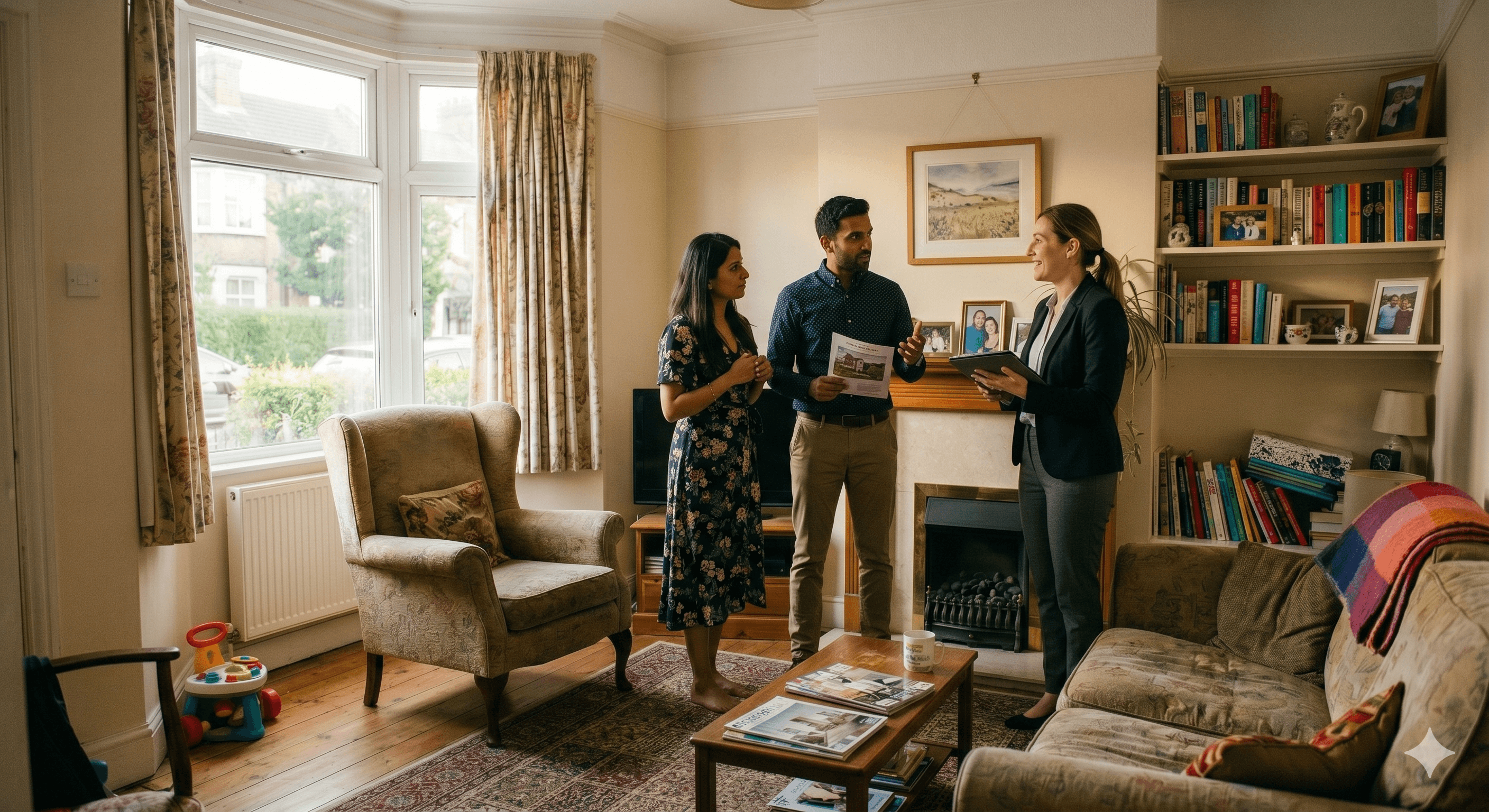

Viewing a house is exciting, but it's easy to get swept up in the moment and forget to ask about the things that really matter.
The right questions can save you from expensive surprises and help you decide whether a property is genuinely right for you.
This guide explains what to ask during a house viewing, what to look out for, and when to start thinking about home insurance.
Key takeaways:
Most first viewings last between 20 and 45 minutes. A second viewing, where you look more carefully at the details, can take up to an hour.
Don't rush. Estate agents expect you to take your time. Walk through every room, open cupboards, check windows and spend a moment in each space. If something doesn't feel right, ask about it.
A second viewing is strongly recommended before making an offer. Try to go at a different time of day so you can see how the light and feel of the property changes.
These are the basics, and often the most revealing.
How long has it been on the market?
If a property has been listed for several months without selling, it's worth asking why. It could be overpriced, or there may be an issue putting buyers off. Don't be afraid to ask the estate agent directly. Most listings provide a ‘listed on’ date as well.
Why is the owner selling?
You may not get the full answer, but it's still worth asking. Common reasons include moving for work, upsizing or downsizing. If the estate agent gives a vague answer, it might be worth asking more questions about the property or the area.
How many viewings has the property had?
This gives you a sense of demand. Lots of viewings with no offers could point to a problem. Very few might mean less competition, or that the property hasn't been well marketed.
Is there a chain?
A chain is when multiple buyers and sellers are connected in a sequence of transactions.
A long chain means more risk of delays or the sale falling through. Ask how many people are in the chain, and whether the seller has already found their next property.
What's included in the sale?
Always ask what fixtures and fittings are included. Curtains, light fittings, kitchen appliances and garden furniture are not automatically part of the sale.
The condition of a property can significantly affect what you'll need to spend after you move in. These questions help you understand what you're taking on.
Has the property had any structural issues?
Ask about subsidence, damp or any history of flooding. These are among the most expensive problems to fix. They can affect your ability to get home insurance, or increase your costs.
If you're concerned, our guide to damp and home insurance covers what you need to know.
When was the boiler last serviced?
A boiler service should happen every year. Ask to see the service record. If the boiler is old or hasn't been regularly maintained, you could be looking at a significant repair or replacement cost shortly after moving in.
How old is the roof?
Roofs typically last between 20 and 50 years, depending on the material. An older roof or one with visible damage could mean a costly job in the near future.
Has any building work been done, and was it done with planning permission?
Extensions, loft conversions and structural changes may need planning permission and building regulations approval in the UK.
If work was done without the right permissions, it could cause legal and financial problems when you come to sell. Ask for documentation.
What's the Energy Performance Certificate rating?
Every property sold in the UK must have an Energy Performance Certificate (EPC).
The rating runs from A, which is the most efficient, to G, which is the least efficient. A lower rating means higher energy bills. It can also affect your mortgage options, so it's worth factoring in.
Buying a home comes with more ongoing costs than just your mortgage. These questions help you understand the full picture.
What council tax band is the property in?
Council tax is a local charge you'll pay every year as a homeowner.
The amount varies depending on the band, from A to H, and the local council. You can check this online, but it's worth confirming during the viewing so there are no surprises.
Is the property freehold or leasehold?
This is one of the most important questions to ask when viewing a property in the UK.
A freehold property means you own the building and the land it sits on.
A leasehold property means you own the property for a set number of years, but not the land. Leasehold properties are common with flats. They often come with service charges, ground rent and rules about what you can and can't do to the property.
If it's leasehold, ask:
Have there been any disputes with neighbours?
Sellers are legally required to disclose ongoing disputes. This includes disagreements about boundaries, noise or shared spaces.
It's also worth checking the boundaries of the garden, as our guide to fence ownership explains who is typically responsible for which boundary in the UK.
The land is just as much a part of the sale as the house but often gets forgotten about.
What land is included?
Find out how far the boundaries go, what is classed as shared or public land, and if there’s any agreement over shared spaces. Check boundaries are clearly defined in the deeds.
Who maintains shared spaces?
If you have a shared garden, driveway or path to access your property, find out how it is maintained and if there are any costs associated with it. If you’re buying a flat, check about service fees for stairs, lighting and access doors.
Access rights
If you have the cross someone’s property, shared land or public land to access your property, check you have legal right of way that is written into the title deeds (and not just informal)? Are there any restrictions to this access (e.g. vehicles vs foot only)?
Are there any restrictions on the land?
If the property comes with a large parcel of land or shared space, check about restricted covenants such as no extensions, no business use or no parking of caravans.
The property itself is only part of the picture. The area around it matters just as much.
Has the area ever flooded?
Flood risk is an increasingly important factor when buying a home in the UK. You can check the government's flood risk map online, but asking directly is a good start.
Flood history can affect your home insurance costs, as explained in our guide to flood insurance and climate risks.
Are there good transport links and local amenities?
If you're new to the UK, getting familiar with an area before moving is important. Ask about nearby bus and train links, supermarkets, schools, GP surgeries and green spaces.
Try to visit the area at different times, including during rush hour, to get a realistic feel for what day-to-day life looks like.
What's the broadband speed?
Broadband speed varies significantly across the UK. Ask the seller or check online using Ofcom's broadband checker. If you work from home, this could be a deciding factor.
What are the neighbours like?
You won't always get a direct answer, but it's still worth asking. If you're buying a flat, ask about noise in particular. Thin walls and floors can make a big difference to how comfortable you feel day to day.
Beyond the questions, there are things to spot with your own eyes.
Here's what to pay attention to during any viewing.
If you're considering making an offer, it’s a good idea to go back for a second look. Here's what to focus on:
A second viewing is also a good opportunity to start thinking practically about furniture, layout and how you'd actually use the space.
Home insurance becomes important once you’ve found the right property and had an offer accepted.
Many mortgage lenders require buildings insurance in place from the moment you exchange contracts. From that point you're legally responsible for the property, even before you've moved in.
You can find out exactly when cover needs to start in our guide to when you need home insurance in the UK.
At Marshmallow, we offer home insurance designed with UK newcomers in mind.
We offer buildings insurance, contents insurance and combined policies, so you can get everything in one place.
To see what you could save, find out more or get a free quote today.
Can I ask for a second viewing?
Yes, and you should. Many sellers and estate agents will expect it if you're seriously interested. A second viewing gives you the chance to look more carefully and ask follow-up questions.
How many viewings should I do before making an offer?
At least two. The first viewing is about getting an overall feel for the property. The second is where you look more carefully and check anything that raised questions the first time.
What should I bring to a house viewing?
Bring a notepad or your phone to take notes. You can also take photos, but ask permission first. A list of questions helps make sure you don't forget anything during the viewing.
Should I visit the area before the viewing?
Yes. Walking or driving around the neighbourhood before your appointment gives you a sense of the area that you won't get from inside the property.
Do I need home insurance before I move in?
In most cases, yes. Many mortgage lenders require buildings insurance from the date you exchange contracts, not the date you move in.
Find out when you need home insurance in the UK, whether it’s required by law, and what renters and homeowners need to know.
Learn the difference between buildings and contents insurance, what each covers, and how to choose the right cover for your home in the UK.
Learn how to calculate your rebuild cost for home insurance and estimate the value of your contents.